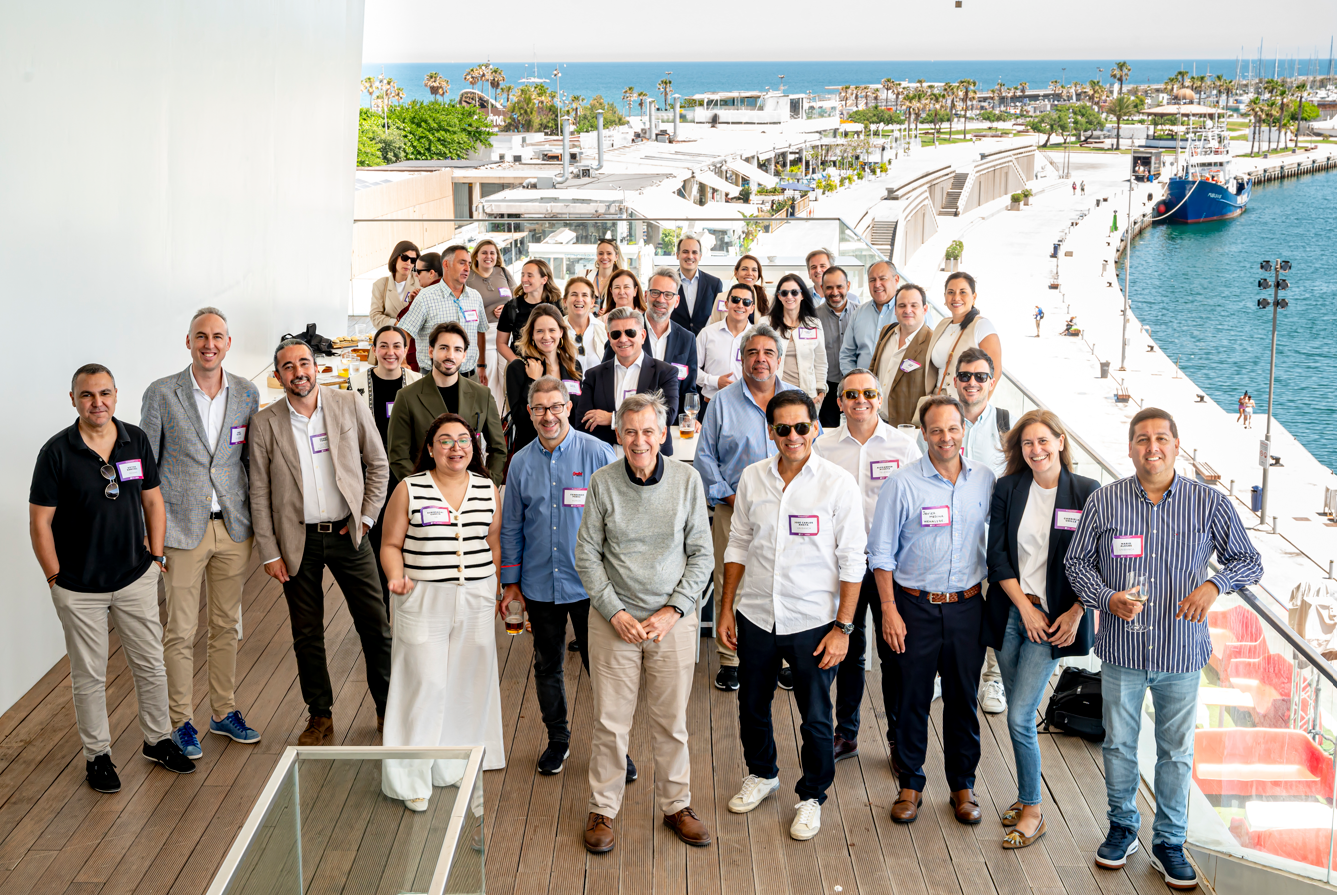
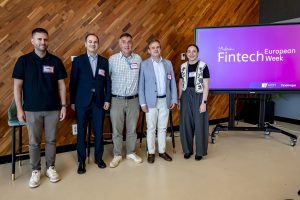
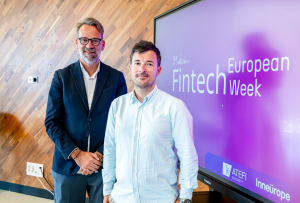
The third edition of the European Fintech Week – Fintech Immersion Program, organized by Inneürope in partnership with ATEFI (Latin American Association of Electronic Funds Transfer and Information Networks), brought together the main leaders of the Latin American financial sector for an entire week in Valencia, with the goal of identifying and scaling cutting-edge fintech solutions in Europe.
Throughout the program, representatives from banks and payment networks from Guatemala, Panama, Peru, Venezuela, and Argentina immersed themselves in the European ecosystem, exploring first-hand disruptive technologies such as artificial intelligence, advanced biometrics, mobile payments, cybersecurity, and predictive analytics.
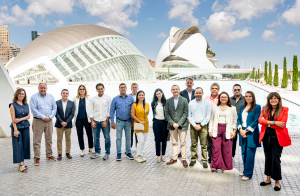
This journey unfolded across three of Valencia’s most iconic venues: Ciutat de les Arts i les Ciències, Veles e Vents, and Villa Indiano, providing a strategic setting that continues to reinforce the collaborative bridge between Europe and LATAM.
Open Innovation: Co-creation as a driver of transformation
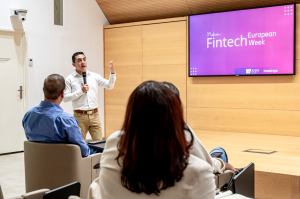
The program opened with a welcome from Óscar Castellano, Executive Director of ATEFI, and Fran Estevan, Founder of Inneürope, who followed with a powerful Open Innovation session that set the tone for the entire week: viewing innovation as an open, collaborative, and results-driven process.
The workshop shared co-creation methodologies used in international projects, such as the successful case developed in Guatemala with 5B, which is now serving as a model for designing new innovation challenges in other countries across the region.
Fintech International: Exploring the Portuguese ecosystem
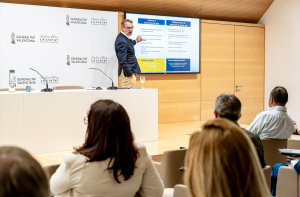
This year, the invited European hub was Portugal, with a delegation led by Portugal Fintech, represented by Joana Correia, Community Manager of The Fintech House, and Teresa Botelho, Senior Consultant at Fintech Solutions.
Alongside them, three prominent fintechs presented solutions highly aligned with current challenges in European and LATAM financial markets:
- Veridas: a leader in digital identity and advanced biometrics, providing secure identity verification solutions for financial services.
- Decta: an end-to-end payment platform offering card issuance, acquiring, digital payments, and online processing, enabling fintechs, PSPs, and banks to scale payment products efficiently.
- SymphonyAI: AI-powered solutions for regulatory compliance, fraud detection, and financial risk management, featuring advanced data analysis tools, risk prevention, and portfolio optimization.
Barcelona: a key hub in European fintech innovation
From the international fintech landscape to Europe’s local talent, the program also highlighted one of the continent’s most dynamic hubs: Barcelona.
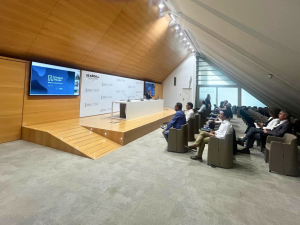
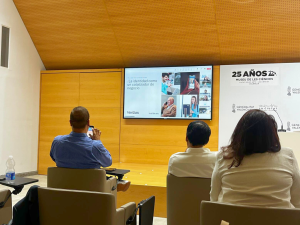
Thanks to Barcelona FinTech, and led by Jayme Gartner-Demarchi, Board Member of Barcelona FinTech, participants gained an insider’s view of some of the most innovative fintechs within the Spanish and European ecosystems, across areas such as payments, alternative credit, open banking, and AI applied to financial services.
A session that provided valuable market insights and new opportunities to strengthen connections between Europe and LATAM.
Cybersecurity in Fintech
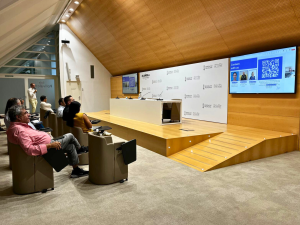
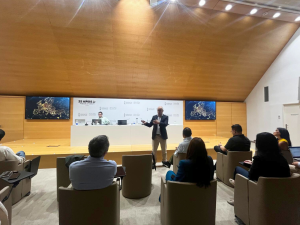
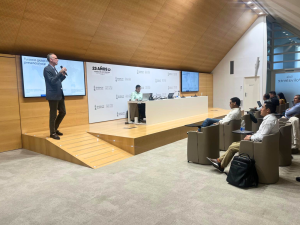
The program also featured a strategic cybersecurity session led by S2 Grupo, a benchmark player in the field, addressing key challenges that financial institutions face today in Europe and LATAM.
With Jordi Oliver (Business Innovation Manager) and Andrés Jiménez (Cyber Security Training & Awareness Manager), the discussion focused on protecting privacy in new digital channels and balancing innovation with security in the design of financial products.
The session sparked great interest, reflecting the growing role of cybersecurity as a critical competitive factor in the financial sector.
AI in Financial Services
One of the week’s most inspiring blocks was dedicated to artificial intelligence and its application to banking and financial services.
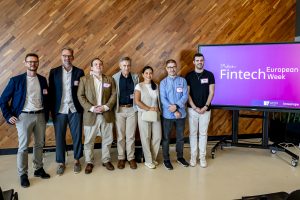
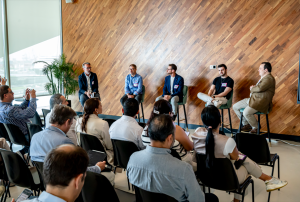
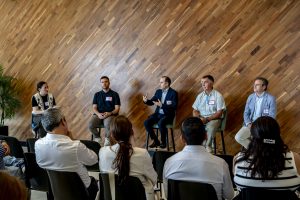
Following their Elevator Pitches, four fintechs participated in a panel showcasing how generative AI and digital agents are revolutionizing customer relationships and optimizing the core processes of financial institutions:
- Aunoa: a B2B platform that automates complex customer management processes, combining traditional and generative AI models to create highly effective autonomous agents.
- Inbenta: advanced customer service solutions leveraging generative AI and natural language processing, integrated into core processes of major financial institutions.
- Maisa: an Agentic Process Automation (APA) platform that deploys Digital Workers with full traceability, enabling seamless integration with existing banking systems.
- Sentimer Technologies: digital sales personalization solutions using generative AI, combined with behavioral analytics to optimize conversions and enhance real-time customer experiences.
The panel emphasized both the regulatory and ethical challenges of AI adoption in financial services, as well as the enormous potential to build more personalized, accessible, and efficient financial services.
Innovation in Payments, Financial Inclusion, and Scoring
Another major theme of the week was the impact of payment technologies and new scoring models on financial inclusion.
The session was led by Fernando Pavón (Co-founder of GAMCO and expert in AI and Scoring), who provided strategic insights into how AI and neural networks are revolutionizing credit scoring and risk management.
He was joined by representatives from fintechs driving sector transformation:
- Kloutit: a platform that fully automates chargeback defense, offering personalized responses and significantly increasing recovery rates compared to traditional methods.
- Truust: a Banking-as-a-Service (BaaS) and payment orchestration platform, enabling businesses to integrate digital payments, IBANs, transfers, and compliance tools through a single API.
- Wenalyze: an open banking solution that transforms financial transactions into enriched data, applying machine learning to optimize scoring, identify recurring patterns, and unlock new business models.
There was clear consensus: innovation in payments, open banking, and scoring is crucial to expanding access to financial services, particularly in emerging markets such as LATAM, while helping to create a more agile, efficient, and inclusive financial system.
Tech Talk: AI and Data-Driven Financial Personalization
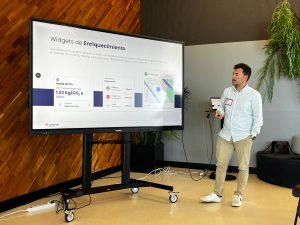
The success story presented by Coinscrap Finance demonstrated how data-driven financial intelligence can transform the relationship between financial institutions and their customers, enabling personalized savings, driving cross-selling, and building predictive, personalized financial experiences.
A clear example of how European fintechs are making a tangible impact in LATAM markets.
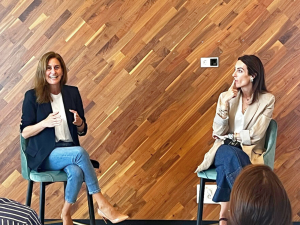
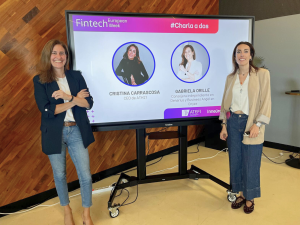
Female Leadership in Financial Sector Transformation
Two of Europe’s most influential voices in the financial sector led one of the program’s most inspiring sessions:
- Cristina Carrascosa, CEO of ATH21, named by Forbes as one of the most creative people in the Spanish business world. A leader in blockchain and cryptoasset regulation, she is a member of the European Commission’s expert group and contributed to Spain’s new Securities Market Law on cryptoassets.
- Gabriela Orille, an executive with more than 20 years of experience in banking, innovation, and digital strategy. Former Co-CEO of MyInvestor and Global Head of Innovation at Andbank, she is now an independent board member at Denarius and an advisor to Onyze. She is recognized in the Top 100 Women Leaders in Spain and Forbes Creative Women in Business rankings.
Their conversation explored key topics shaping the future of financial services: Digital Euro as a driver of open banking, tokenization of assets, evolving regulatory frameworks in Europe, and ethical challenges related to AI and blockchain, among many other relevant trends.
Networking with a Vision for the Future
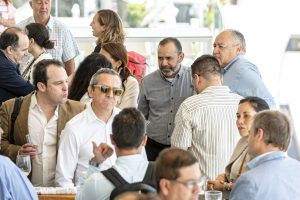
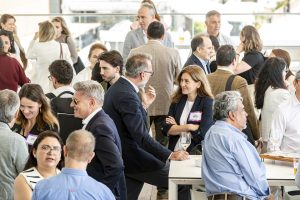
After the content sessions, Veles e Vents hosted a vibrant networking space, bringing together more than 20 European fintechs with representatives of LATAM payment networks and banks.
Alongside the startups and scaleups featured in the panels and pitches, additional participants included companies such as Uelz, Colibid, Crownie, Inespay, and Wealthreader, as well as major technology firms, financial institutions, and key local ecosystem players such as Sésame, Valencia Innovation Capital, Santander, Caixa Popular, Cátedra de Cultura Empresarial, Invest in Valencia, S2 Grupo, Fundación Bursátil, Universitat de València, and Universitat Politècnica de València, along with leading experts and ecosystem stakeholders.
An ideal setting to build new transatlantic connections and explore synergies between European and LATAM financial ecosystems.
Co-creation of Strategic Challenges
Led by Fran Estevan, this block was one of the edition’s most distinctive highlights. Participants worked in groups on four key areas: financial inclusion and new scoring models, AI for operational efficiency, fraud, and sales, new digital experiences, and payments, open banking, and interoperability.
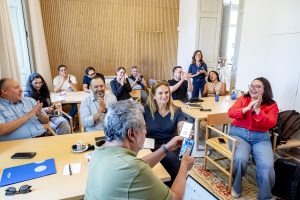
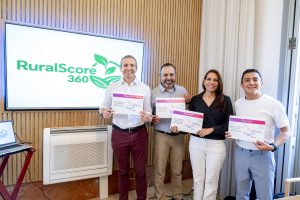
Each group presented their proposal through an Elevator Pitch Session. The result: tangible projects that will move toward proofs of concept within ATEFI’s networks, in collaboration with European fintechs. And yes—there was even a winning team!
When Innovation is Cooked Up as a Team
To close the program, a very special activity took place: the Networking Experience Cooking.
In a relaxed atmosphere at Villa Indiano, and led by Chave Soler—renowned chef and first-ever winner of the World Paella Cup in 2020—participants prepared a traditional Mediterranean dish, sharing ideas, building relationships, and forging new alliances. A perfect way to wrap up an intense and deeply connected week of work and collaboration.

With this third edition, the European Fintech Week is now firmly established as a program that not only inspires, but also drives real projects, strategic connections, and long-term partnerships. The future of banking and financial services is collaborative, open, and global. And on this path, Inneürope and ATEFI continue to build an increasingly strong bridge between the European and LATAM ecosystems.
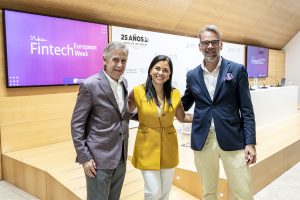
We’ll see you at the 4th edition—this is just the beginning!