As we moved into the fifth week of the Venture Incubation Program —an EIT Digital initiative led by Inneürope— participants were invited to take a step back and look at the bigger picture: how to build a solid, realistic, and testable business model.
The session, Business Modeling, was led by Elias Tefarikis, founder of Smyrna Labs and international mentor with over two decades of experience helping startups design scalable ventures around real needs.
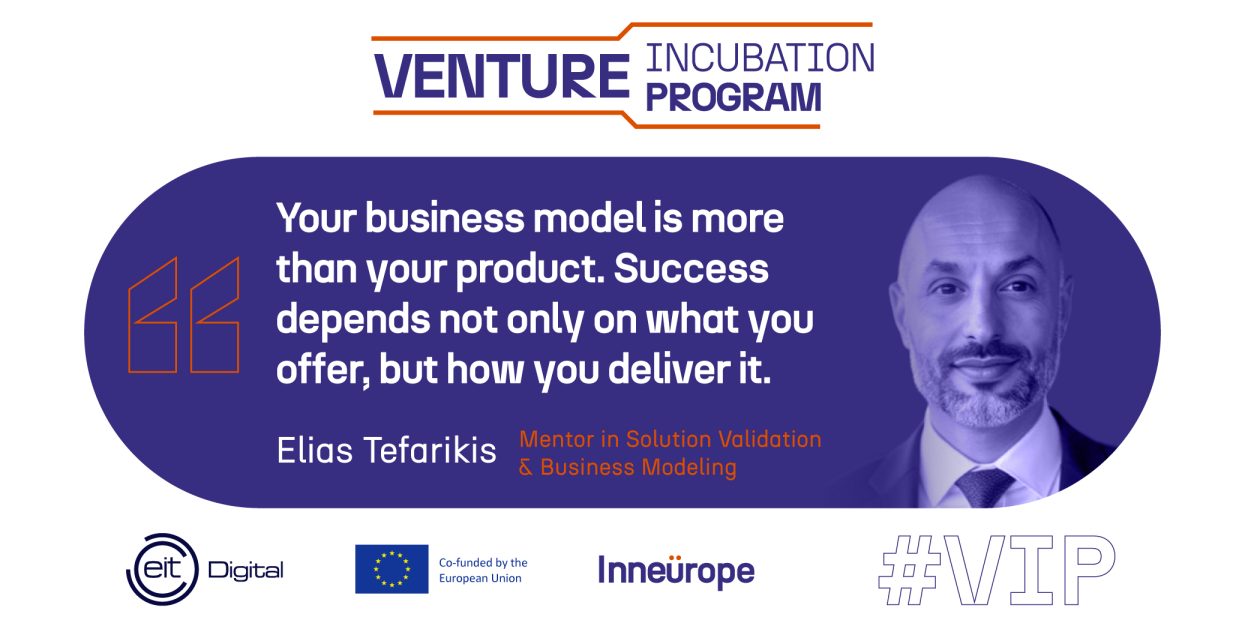
His message? Simple but powerful: “Your business model is more than your product. Success depends not only on what you offer, but how you deliver it.”
Throughout the session, Elias guided participants through a hands-on workshop using the Business Model Canvas, helping them identify key elements such as customer segments, value propositions, and revenue streams.
But this wasn’t just about theory — it was about doing. Participants mapped out their ideas live, shared their challenges, and received immediate feedback from both peers and the mentor himself. The goal? To gain clarity, iterate fast, and connect each block of the business model with real-world logic.
Some of the key messages that stuck:
- You’re not a startup forever. A startup is a temporary organization designed to validate a business model. Once that model works, you’re a company.
- Focus is the hardest part. It’s easy to get distracted by new opportunities. A good model helps you say no.
- The business model isn’t a guessing game. It’s a tool to test hypotheses. Every box is a question that the market will answer.
- Know who pays and who uses. Often, your user and your customer aren’t the same. Map both.
- Talk to real people. Don’t just fill in the blocks. Get feedback from actual potential users and buyers — even if it’s informal.
Elias emphasized the importance of practicality over perfection. The canvas isn’t about having all the answers. It’s about starting with the right questions and building a venture that’s structurally sound — not just exciting.
As part of the follow-up, each team will complete their business model canvas, get peer and mentor feedback, and prepare to test their assumptions in the field.
And now, a well-deserved pause!
The program will take a two-week break, giving teams time to reflect, validate ideas, and prepare for what’s next. Up next: Go-to-Market Strategy, led by Marina Lecas. Until then, keep building, questioning, and refining.
We’ll keep sharing insights, lessons, and standout moments from the #VentureIncubationProgram — because real startups don’t just pitch ideas… they build models that work.