Inneürope, as a member of the HUMAINE initiative, is part of a consortium of 17 partners committed to developing a revolutionary Operating System (OS) to enhance collaboration between humans and Artificial Intelligence (AI) across various industrial sectors. This project financed by the European Commission, aims to improve human-machine collaboration in fields such as healthcare, energy, automotive, and more, ensuring that AI acts as support rather than a replacement for humans.
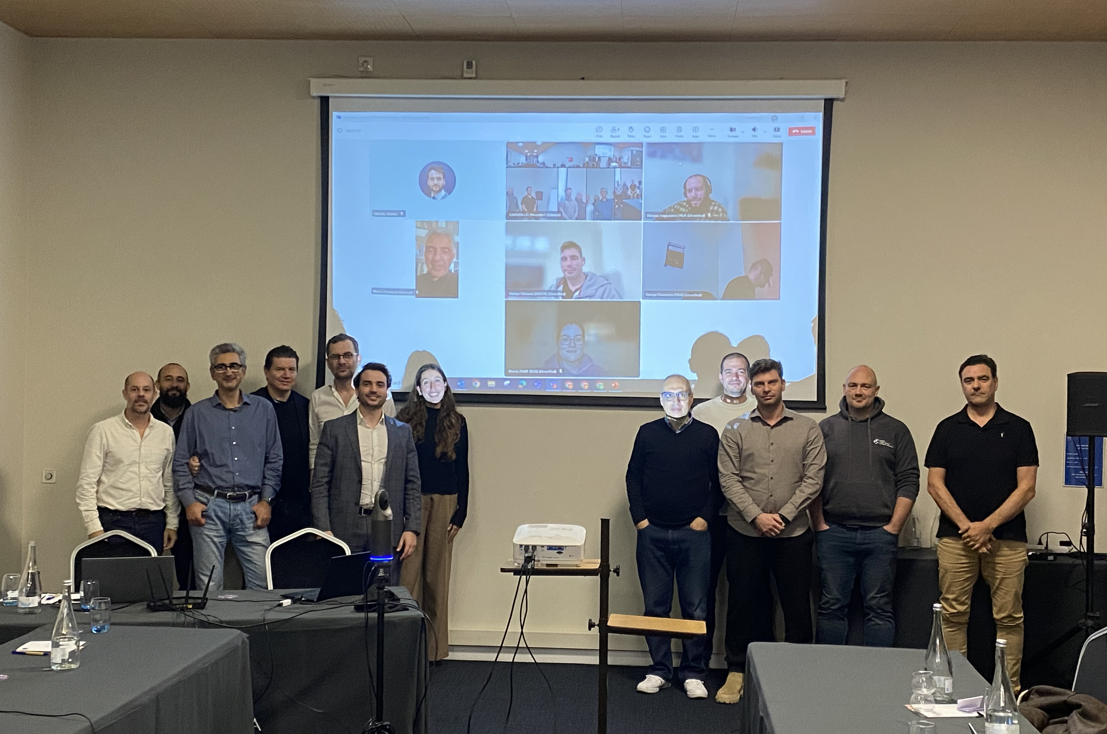
After a year of work, during which significant progress has been made, HUMAINE held its first Technical Review Meeting in Caparica (Lisbon) on November 27th and 28th. During this meeting, the team presented the progress achieved so far to the European Commission. It was an excellent opportunity to showcase the advancements made, the innovations implemented, and the results obtained up to this point.
One of HUMAINE‘s main goals is to create a more efficient and ethical collaboration model between humans and AI. This is achieved through an architecture that allows both systems to work together smoothly and reliably, ensuring that interactions are clear and transparent. Additionally, the project focuses on improving mutual learning between humans and machines, so that both can collaborate more intelligently and effectively.
In the coming months, HUMAINE will continue advancing the development of this platform, focusing on improving decision-making in dynamic environments. The team is committed to making the solutions developed useful, accessible to all users, facilitating the integration of AI across industries, and promoting a positive long-term impact.
We continue forward with the goal of creating a more collaborative and sustainable future!

HUMAINE is a project funded by the European Union through the Horizon Europe program, Grant Agreement No. 101120218. However, the views and opinions expressed are solely those of the author(s) and do not necessarily reflect those of the European Union. Neither the European Union nor the granting authority can be held responsible for them.